

Description
What a 2CR5 is, and the category error on this page
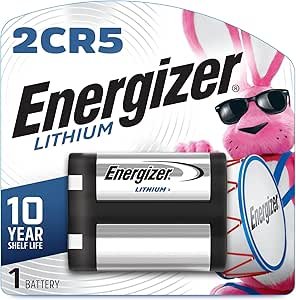
Energizer sells the 2CR5 as a single battery pack. That is very nearly the whole of what this listing contains: the specification block is completely empty, with no ASIN, no dimensions, no weight, no manufacturer field, no ratings and no sales rank. There is no description. Four feature bullets are the entire body of the page.
Start with the thing the site itself has wrong. This product is filed in the 3V category, and a 2CR5 is not a 3 volt battery. The designation says so: the leading 2 indicates two cells, each a 3 volt lithium manganese dioxide cell, wired in series inside a single rectangular housing. A 2CR5 delivers a nominal 6 volts. Putting it in a 3V bin alongside coin cells is a straightforward classification error, and it matters because someone shopping by voltage could order the wrong thing. The coin and small cylindrical cells are properly grouped under 3V batteries, and general purpose stock sits under household batteries.
The 2CR5 is a photo battery. It was designed for autofocus 35mm film cameras of the late 1980s and 1990s, and it survives today in some early digital cameras, in industrial sensors, in alarm and access control panels, and in a scattering of medical and measurement equipment. If your device takes one, nothing else fits: the housing is a specific rectangular shape with both contacts at one end, and there is no common substitute you can improvise from other cells. Check the number molded into the old battery or printed in the equipment manual before ordering.
Why lithium, and what that buys you
Lithium primary chemistry is chosen for this format for three reasons, and they explain why a camera battery is built this way rather than as a pair of alkaline cells.
The first is a flat discharge curve. A lithium cell holds close to its nominal voltage for most of its life and then drops off quickly, where an alkaline cell sags gradually. A camera that needs a strong pulse to charge a flash capacitor performs consistently until the battery is nearly finished, instead of getting slower and slower.
The second is cold tolerance. Lithium cells keep working at temperatures where alkaline output collapses, which is why they are specified for outdoor and unheated equipment.
The third is shelf life. Lithium primaries self discharge very slowly, which is what makes them suitable for a camera that sits in a cupboard for a year between uses, or for an alarm panel that must still work after a long quiet period.
The two claims on the listing, read carefully
Energizer states that no other battery takes more pictures, based on industry standard testing. That is a comparative superiority claim and the listing names no standard, no test body and no comparison set. It also reads like copy written for a different Energizer product line rather than for this format. Treat it as a manufacturer claim without a citation.
The other bullets are “Made from the Highest quality materials”, which is unfalsifiable, “Brand name: Energizer”, which is not a feature, and, most oddly, “Allergen information: gluten_free” on a lithium battery. That last entry is a data import artifact from a food catalog template and it should not be read as meaning anything at all.
Handling and safety
Lithium primary batteries are safe in normal use and unforgiving of abuse. The rules are short and they matter.
Never attempt to recharge a 2CR5. It is a primary cell and charging can cause it to vent, leak or rupture. Never short the terminals, never pierce or crush the housing, and never put it in a fire or expose it to high heat. Do not mix it with other batteries in a device, and do not carry a spare loose in a bag with keys and coins, where the contacts can bridge. Keep the battery in its original packaging until it goes into the device, and store it in a cool dry place rather than a hot car glovebox.
Keep batteries of any kind out of reach of children. A 2CR5 is far too large to swallow, unlike a coin cell, but a child can still damage one, and a leaking cell contains an irritant electrolyte. If a battery leaks in a device, do not touch the residue with bare hands.
Air travel has its own rules for lithium batteries: they generally belong in carry on baggage rather than checked baggage, with the terminals protected. Check the current airline guidance before flying with spares.
Disposal, cost and where it sits in this catalog
Do not put lithium batteries in household trash where local rules prohibit it, and never in a curbside recycling bin, where a shorted cell becomes a fire risk inside a collection truck. Tape over the contacts and take spent cells to a battery collection point. Many retailers and municipal hazardous waste sites accept them.
On cost, a 2CR5 is an expensive battery per unit and a cheap one per use, because it lasts a long time in the low drain equipment that uses it. A single pack is the sensible purchase for most people, since buying several of a battery this specialized means holding stock that ages, even with lithium’s slow self discharge. The exception is equipment that must not fail, such as an alarm panel, where one spare in a drawer is cheap insurance.
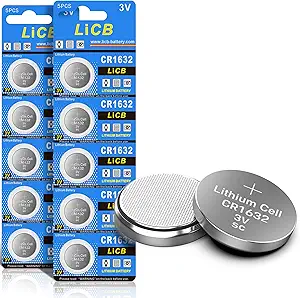
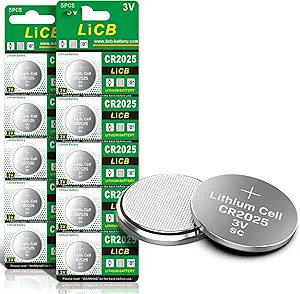
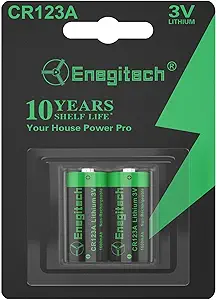
It is also worth saying plainly that a photo battery is an outlier in a catalog built around cleaning, laundry and pest control. It sits here because households buy batteries alongside everything else. The nearest relatives on the site are other lithium primaries such as the Enegitech CR123A, which serves a similar role in cameras and flashlights, and the coin formats such as the LiCB CR2025 and the LiCB CR1632, which genuinely are 3 volt cells. For rechargeable packs in a different class again, the Streamlight rechargeable battery is the comparison.
Who should buy it and who should not
Buy it if your camera or equipment manual specifies a 2CR5 and you want a mainstream brand rather than an unbranded import. For a device that is used occasionally, the long shelf life of a lithium primary is the main practical benefit and Energizer is a known quantity.
Do not buy it because you were shopping for a 3 volt battery, because this is a 6 volt pack and the category placement is wrong. Do not buy it expecting any specification detail from this listing, which has none. And do not stock up unless you use several: this is a specialized format, and the empty specification block means you cannot even confirm the pack contents from the page.