Description
What Theochem is selling and to whom
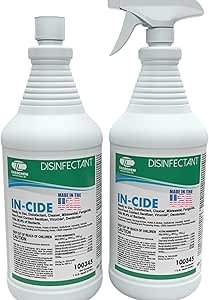
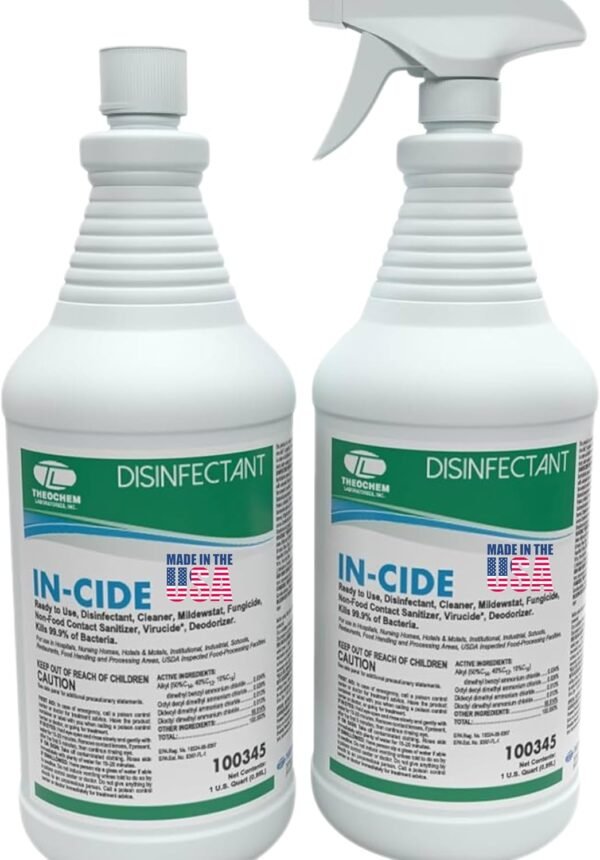
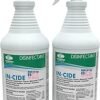
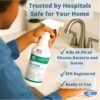
In-Cide is a ready to use disinfectant spray sold here as two 32 ounce bottles, aimed at homes, schools, offices and, the listing says, hospitals. Theochem describes itself as a family owned American manufacturer operating since 1962, and the product is presented as a professional grade cleaner that also disinfects. The practical proposition is a single bottle you spray on a hard surface to remove soil and, according to the label, kill microorganisms, with no dilution step in between.
That combination is the appeal and also the thing to be careful about. A cleaner and a disinfectant are doing two different jobs. Cleaning lifts soil. Disinfecting requires an antimicrobial active to remain in contact with the surface, wet, for a specified period. When one bottle claims both, the label is where the details live, and it is worth being precise about what this particular listing does and does not tell you.
The regulatory claims, exactly as the manufacturer states them
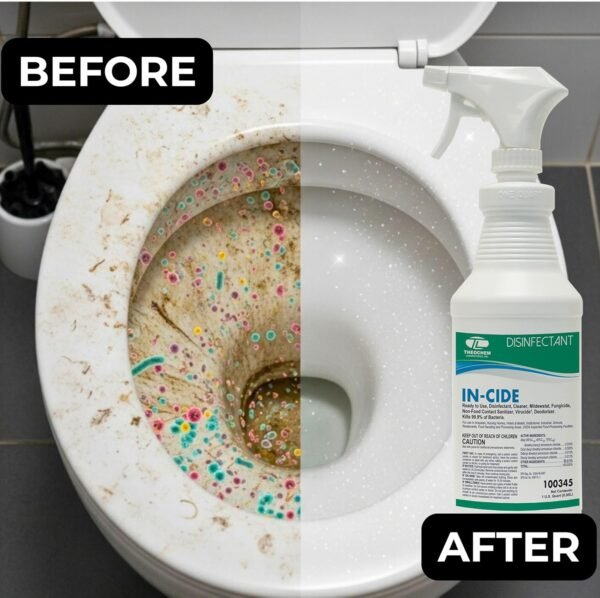
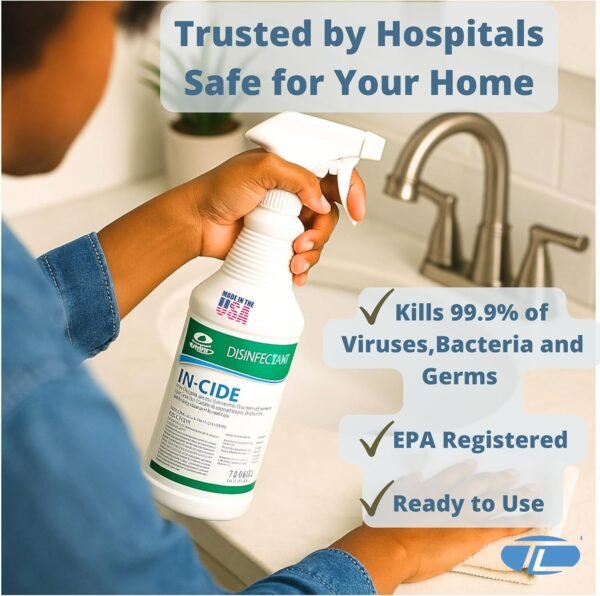
Theochem’s product title states that the spray is EPA registered and kills 99.9 percent of germs, and it names norovirus and MRSA. A bullet repeats that it kills 99.9 percent of bacteria and viruses and adds that the product is EPA List N registered. Those are the manufacturer’s claims about its own product, reported here as claims. We do not test anything and we make no statement about what this product kills.
What is missing from the listing is the information that would let a buyer verify any of it. No EPA registration number appears. In the United States every registered antimicrobial product carries a registration number printed on the label, and that number is how a purchaser confirms a product is registered and what it is registered to claim. It is not in this listing. Neither is the contact time, and contact time is the single most consequential number on a disinfectant label.
Contact time is the detail that decides whether it works
A disinfectant claim is only valid for the dwell time the label specifies. If the label says the surface must remain visibly wet for four minutes, then spraying and immediately wiping the surface dry does not deliver the claimed result, regardless of the percentage on the bottle. Many surfaces dry faster than the required dwell time, which means a second application is needed to keep them wet. Because this listing publishes no dwell time at all, the only way to use this product as a disinfectant is to read the printed label on the bottle you receive and follow the time it gives. Do not assume a spray and wipe motion achieves anything beyond cleaning.
Where it goes, and the claims that do not sit together
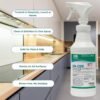
The listing names countertops, tiles, glass and stainless steel, and singles out high touch points such as door handles and light switches. Those are the surfaces a ready to use quaternary or similar disinfectant is typically formulated for. The listing does not name the active ingredient, so there is no way to say from the page whether this is compatible with natural stone, aluminum, painted surfaces or acrylic. Treat unsealed stone, marble, brass and anodized aluminum as unknowns and test first. Do not use it on food contact surfaces without checking whether the label requires a potable water rinse afterward, because most registered disinfectants do.
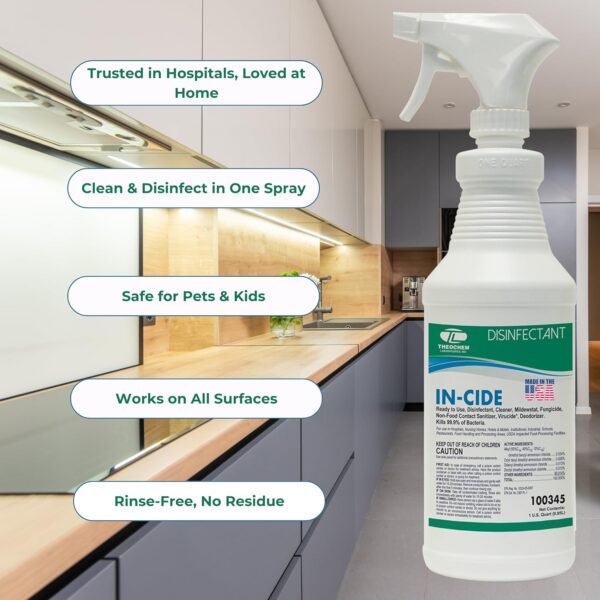
Two claims in the listing should be flagged rather than repeated. Theochem’s bullets describe the product as non toxic and free of harsh chemicals, and as safe for families and pets. A product registered with the EPA as an antimicrobial is by definition a pesticide, and describing a registered pesticide as non toxic or safe is a claim that United States pesticide labeling rules do not permit. The spec field also carries the fragment “Material Feature: Biodegradable Warning”, which is not a coherent statement about anything. We are reporting these as they appear; we are not endorsing them, and a buyer should weigh the safety language on the printed label above the marketing language on a product page.
Using it correctly, and storing it away from other chemicals
The correct sequence with any disinfectant is clean first, then disinfect. Soil, grease and protein residue shield microorganisms from the active ingredient, so spraying a dirty counter and wiping once mostly moves dirt around. Wipe the surface clean, spray again, and leave it wet for the time the label specifies before wiping or letting it air dry.
Ventilate the room. A 32 ounce trigger sprayer puts a fine mist into the air, and there is no reason to breathe it; open a window or run an extractor and avoid spraying toward your own face or toward a pet. Wear gloves for extended use. Keep it off skin and out of eyes, and keep the bottles out of reach of children. Never combine this with bleach, with an ammonia based glass cleaner, or with an acidic bathroom product, and never decant it into a bottle that held something else. Since the active is not disclosed on this page, any mixing is a gamble with an unknown, and the possible outcomes include chlorine and chloramine gas. If a second product is needed on the same surface, rinse in between. Store the spare bottle upright, capped, out of sunlight and away from heat.
Cost, and the alternatives worth weighing
Ready to use is the expensive way to buy a disinfectant, because you are paying to ship and store water. Two 32 ounce bottles is 64 ounces of finished product with no dilution step, and that is exactly what a buyer is choosing: convenience, consistency and no chance of a mixing error, in exchange for a higher cost per ounce of surface treated. Institutions buy concentrates for the opposite reason. For a household using a bottle every few months, ready to use is a reasonable trade.
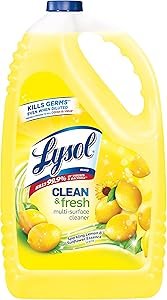
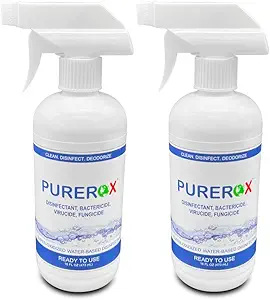
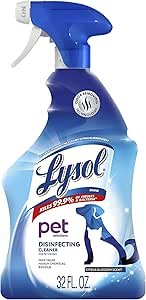
The comparisons worth making are on active chemistry rather than price. The mainstream option is a widely distributed registered spray such as Lysol disinfectant spray or the trigger format Lysol disinfecting cleaning spray, both of which print a registration number and a contact time on the label. A different chemistry entirely is offered by the Vital Oxide cleaner and by hypochlorous acid products such as the Briotech hypochlorous acid spray, which appeal to buyers who want a milder odor profile. Where a wipe is more practical than a spray, our disinfectant wipes shelf covers that format, and the rest of the sprays are in disinfectant sprays and liquids.
Other oddities in the record: the package dimensions of 12.2 by 7.05 by 3.35 inches and 4.74 pounds are consistent with two quart bottles, so the pack quantity is at least internally coherent, but the listing gives no ASIN level variation data to tell a single bottle from the two pack, and it simultaneously describes the product as suited to hospital settings and to everyday home use without distinguishing the label directions for each. The item currently ranks 59th in the retailer’s disinfectant sprays and liquids chart.
Who should buy this, and who should not
Buy it if you want a ready to use registered disinfectant in a large format, you clean before you disinfect, and you will read the printed label for the registration number and the contact time. Do not buy it if you need to verify the registration and claims before purchase, since the listing does not publish the number, and do not buy it on the strength of the non toxic and safe for families wording, which is not language that belongs on a registered antimicrobial product.