
Description
Refills, not a roller, and the measurement that decides everything
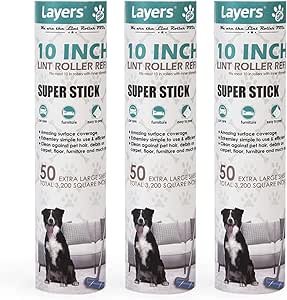
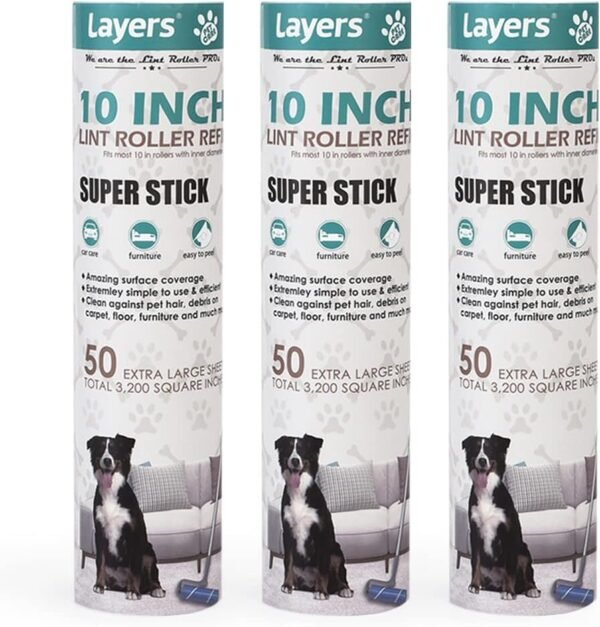
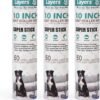
The first thing to be clear about is what arrives. This is a three pack of adhesive refill rolls for a large lint roller. There is no handle in the box. If you do not already own a compatible roller, these are not usable on their own, and that is the most common way a refill purchase goes wrong.
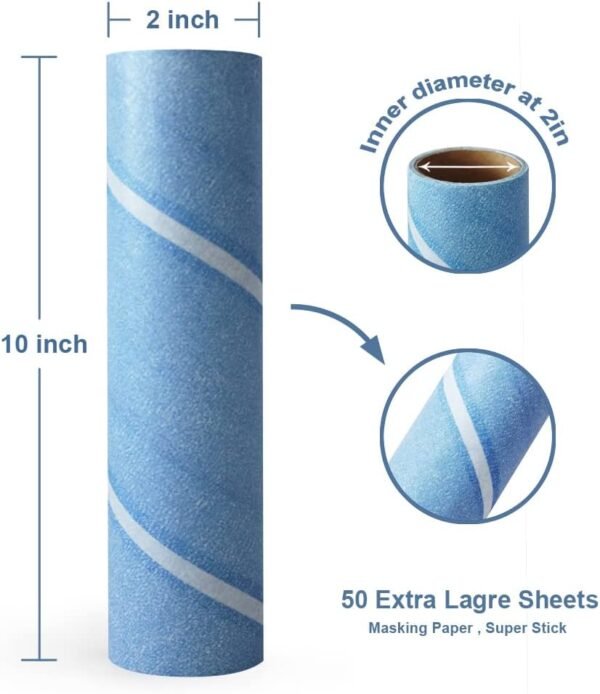
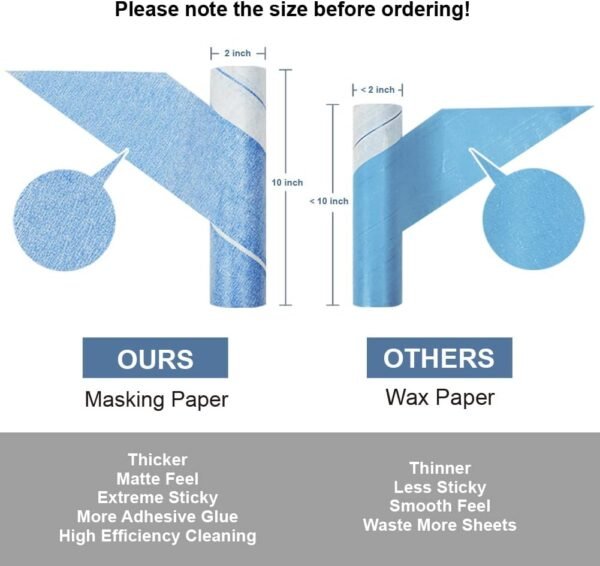
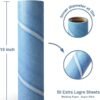
Compatibility comes down to two numbers, and Layers publishes both. The rolls are 10 inches wide with a 2 inch inner diameter, and the manufacturer describes them as designed for most large lint rollers and mega rollers on the market. Measure your handle before ordering: the width of the roll and the diameter of the core have to match the bar it slides onto. A roll that is too narrow rattles, and one with the wrong core will not seat at all. If your roller is a standard household size rather than a large one, these will not fit, and a standard roller refill or a reusable tool such as the Scotch-Brite lint brush covers that job instead.
What a 10 inch roll is actually for
Width is the reason this format exists. A standard lint roller is around four inches wide and is built for a jacket shoulder or a pair of trousers. A 10 inch roll covers more than twice the width in one pass, which changes what the tool is good at. Layers names carpets, hard flooring and sofas, and those are the right targets: large flat areas where the limiting factor is how many passes you have to make rather than how precisely you can reach a seam.
The trade is precision. A wide roll cannot follow the contour of a sleeve, get into an armhole or work around a collar, and on a soft sofa cushion a wide roll bridges the dips and misses the low spots. Households with a shedding dog and a large sofa will get more out of a wide roll than households with one cat and a wardrobe of dark clothes. If your problem is garments rather than furniture, a smaller tool like the Scotch-Brite mini lint remover is the better fit.
The spiral design, explained
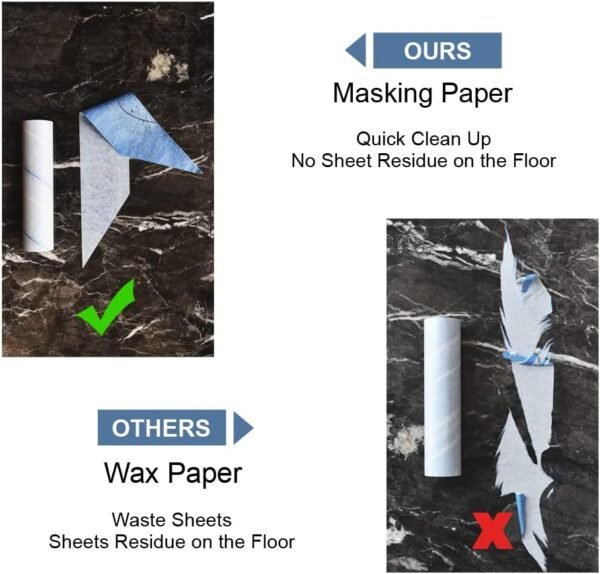
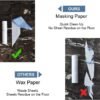
Layers makes a specific and checkable claim about the sheet layout. Rather than a straight perforation across the roll, the sheets are cut on a spiral with a small gap at the leading edge of each layer, so the next layer is always visible and can be lifted from the side. The company describes this as eliminating waste sections and giving a fully usable area on every roll. The mechanism is real and it addresses a genuine annoyance: on a conventionally perforated roll, finding the edge of the next sheet with sticky fingers is the fiddly part, and the tab that stops it sticking to itself is dead area. Whether that translates into a meaningfully greater usable surface is Layers’ claim rather than a measured figure, but the ease of peeling is a straightforward consequence of the geometry.
Surfaces it suits, and where adhesive is the wrong idea
Adhesive rollers work on any surface that is flat, dry and robust enough to take a light pull. Carpet, rugs, upholstery, curtains, bedding, car seats, coats and hard flooring all qualify. The adhesive lifts hair, lint, crumbs, glitter and fine grit that a vacuum leaves behind, and on short pile carpet it often does better than a vacuum on embedded pet hair.
Where to be careful: loose weaves, open knits, lace, boucle and anything with a long loop pile can be pulled by an aggressive adhesive, and a roll described by its manufacturer as extremely sticky is at the aggressive end. Test lightly first. Avoid it on delicate wallpaper, on unsealed painted surfaces, on leather and on anything with a loose finish, because adhesive that grips harder than the surface holds together takes the surface with it. Do not use it on wet or damp fabric, since the adhesive will not release cleanly and the sheet tears.
Nothing here is chemical. There is no solvent, no propellant, no fragrance and nothing to ventilate, which makes an adhesive roller one of the safest cleaning tools in the house and a sensible choice for households where sprays are a problem. The only real caution is the obvious one: keep loose adhesive sheets away from small children and pets, since a sticky sheet in a mouth is unpleasant.
Using them well, and what the listing does not tell you
Roll in one direction with light, even pressure rather than scrubbing back and forth, which pushes debris along instead of lifting it. Peel a used layer as soon as it stops picking up, because a saturated sheet does nothing and people persist with them far longer than they should. Layers’ spiral gap means the peel starts from the side, which is worth knowing before you scratch at the end of the roll looking for a tab.
Store the rolls in a bag or a drawer rather than loose, because dust settles on an exposed outer layer and you lose a sheet before you have used it. Do not store them next to a heat source, since adhesive softens and layers bond to each other in a hot cupboard.
The one thing the listing does not publish is the sheet count. There is no number of sheets per roll, no total sheet count across the three pack and no adhesive type. For a consumable, sheet count is the number that decides value, and its absence means cost per sheet cannot be calculated from the page. Recorded weight for the three pack is 1.59 pounds, first availability was May 2019, and the record shows 1,327 ratings averaging 4.5 stars with a rank of 121st in Lint Removers. The listing title also contains a stray full width comma and a truncated phrase about width in the market, which reads like a superlative that lost its adjective.
Cost structure and the alternatives
Adhesive rolls are a permanent consumable, and that is the honest comparison against every reusable tool in this category. A roller costs a little forever. A brush or a shaver costs more once and nothing afterward. Which is better depends entirely on volume: for occasional garment touch ups the reusable tool wins easily, and for a household clearing a large sofa daily the speed of a wide adhesive roll is worth the ongoing spend.
Within reusable alternatives, a rubber or silicone pet tool such as the Axlunar pet hair remover uses drag and static rather than adhesive and works well on carpet, while a fabric shaver solves the different problem of pilling and cannot be substituted for either. For the laundry room itself, the magnetic lint bin catches lint at the source. The full lint removers category covers all four approaches, and the dryer sheets category is relevant if static is what keeps pulling lint back onto your clothes.
Who should buy these
Buy them if you already own a 10 inch roller with a 2 inch core, you clear large areas of carpet or upholstery regularly, and the spiral peel is a feature you want. Skip them if you do not own a compatible handle, if your roller is a standard four inch model, if your work is garment detail rather than large surfaces, or if you need a sheet count before committing to a consumable. Measure the handle first: on a refill, fit is the only thing that matters and it is the one thing you cannot fix after the box arrives.