




Description
Four alkaline nine volts, and what they are really for
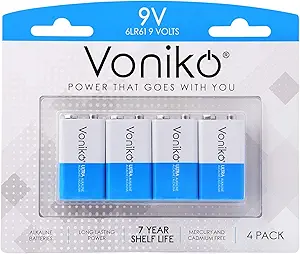
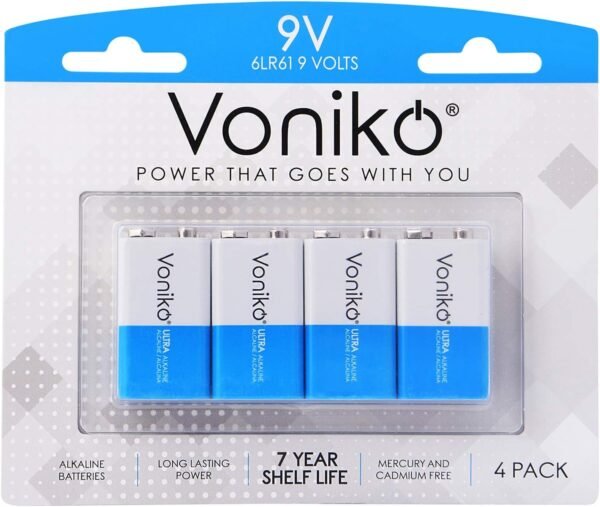
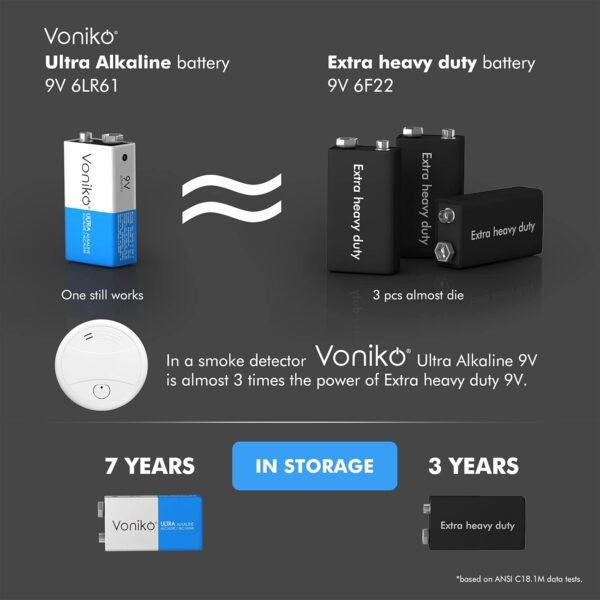
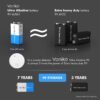
Voniko sells these as a four pack of alkaline 9 volt batteries, model 6LR61, which is the international designation for an alkaline nine volt cell. The company states a seven year shelf life and describes the cells as containing no mercury or cadmium, with a double layer internal structure inside a stainless steel cover.
The nine volt is an unusual format in a modern house. Almost nothing portable uses it any more, because devices have moved to AA, AAA and rechargeable packs. What still does is a short and important list: smoke alarms and carbon monoxide alarms, guitar effect pedals and active instrument pickups, multimeters and test equipment, wireless microphones, some medical devices, and older garage and gate remotes. A four pack is exactly the quantity a house with two or three alarms goes through in a year.
The device list in this listing is wrong
The third bullet says these batteries are suitable for digital cameras, remote and game controllers, wireless keyboards and mice, alarm clocks, radios, shavers and electronic toys. Most of that list cannot be right. Digital cameras, wireless keyboards, mice and game controllers take AA or AAA cells or built in rechargeable packs; none of them takes a nine volt.
Where the text came from
The wording is nearly identical to the bullets on the same brand’s AA listing, including the opening line about bringing batteries into the digital age, so the device list was copied across from the AA product and never edited. It is worth naming because a buyer scanning the bullets could reasonably conclude these will power something they will not fit at all.
The more significant omission follows from the same error. Smoke alarms are the single largest domestic use of nine volt batteries and they are not mentioned anywhere on this page. If you are buying these for alarms, and most people buying nine volts are, follow the alarm manufacturer’s instructions on battery type and replacement interval rather than any general advice, because a smoke alarm is a life safety device and its maker specifies what goes in it.
Alkaline chemistry, and the claims to weigh
Voniko states the cells are 6 to 9 times better than what it calls yesteryear’s standard carbon batteries. That is a comparison against zinc carbon cells, a chemistry largely displaced decades ago, so it tells you almost nothing about how these compare with a current alkaline from a major brand. A separate bullet is more candid, saying the cells last as long as many leading national brands, which is a parity claim rather than a superiority one.
The seven year shelf life figure comes with no storage temperature attached, and shelf life for any battery is a function of how it is stored. Keep them at room temperature rather than in a hot loft or a cold garage, and they will hold up.
The claim that the batteries are 100 percent leakproof is the one to treat carefully. No battery is absolutely leakproof, and alkaline cells leak potassium hydroxide when they are over discharged, reverse charged or left flat in a device for a long time. Voniko’s stainless steel cover and double layer construction are a real design approach to reducing the risk, and the same bullet then gives the advice that actually prevents leaks: avoid short circuits and do not mix old batteries with new ones. Follow that rather than the absolute claim.
The safety point specific to a nine volt
A nine volt battery has both terminals side by side on the same face, and that geometry makes it the most dangerous common household cell. Anything conductive laid across the top completes a circuit: keys, coins, paper clips, a strip of aluminum foil, or steel wool. A shorted nine volt heats rapidly, and nine volts in contact with steel wool is a documented method of deliberately starting a fire, which tells you how quickly it can happen by accident in a junk drawer.
The rules follow directly. Never store loose nine volt cells in a drawer with metal objects. Keep them in the original card or a battery case. Tape over the terminals of any used cell before you put it in a collection bin, using electrical or duct tape across both contacts. Do the same for a spare you are carrying in a bag. Never carry one loose in a pocket.
Beyond that, the ordinary rules apply. Do not attempt to recharge an alkaline cell; these are primary batteries and charging them can cause them to vent or rupture. Do not puncture, crush, heat or incinerate them. Replace all cells in a device at the same time and do not mix chemistries or brands. Remove batteries from any device being stored for a season. Keep them out of reach of children and pets, and take them to a battery collection point at end of life rather than putting them in household trash.
Cost, and the alternatives by chemistry
Alkaline is the right chemistry for the nine volt format in almost every domestic case. Lithium nine volts exist and last longer at a considerably higher price, and rechargeable nine volts exist but self discharge in a way that makes them a poor choice for an alarm you check twice a year. For a device that sits idle for months and then has to work, an alkaline primary is the sensible default.
Within this catalog the comparisons are across formats rather than within this size, since this is the only nine volt listed. The same brand’s Voniko AA lithium cells show what the premium chemistry costs, while the EBL rechargeable AA batteries and the BEVIGOR rechargeable AA cells cover the rechargeable case in the size where it actually pays. Other formats include the Streamlight rechargeable battery and small cells such as the Energizer button cells, which carry their own and much more serious swallowing hazard for small children. The nine volt shelf is under 9V, with the rest under household batteries.
Record oddities: the description field is empty, the device list belongs to a different product, and the specification block includes a field reading “4 9V batteries required (included)” on a product that is itself four nine volt batteries. The environmental claim rests on the absence of mercury and cadmium, which is a composition fact rather than an environmental assessment. The pack weighs 6.4 ounces for four cells and the item currently ranks 9th in the retailer’s 9V batteries chart on 12,954 ratings averaging 4.6 stars, which makes it one of the best established items in this catalog.
Who should buy this pack
Buy it if you have smoke alarms, test equipment, instrument pedals or other genuine nine volt devices and you want a four pack with a long shelf life at a mainstream price. Ignore the device list in the bullets, which was copied from an AA product, and follow your smoke alarm manufacturer’s guidance on battery type. Whatever you buy, tape the terminals before storing or disposing of a nine volt.